

Overlock-Techniken: Bindegürtel, Gürtelschlaufen und Paspeltaschen
CREATIVATE Bildung
Juli 01, 2025
Der Unterschied zwischen einem guten und einem großartigen Kleidungsstück liegt fast immer im Detail. Diese drei Techniken – ein strukturierter Bindegürtel, maßgeschneiderte Gürtelschlaufen und gepaspelte Taschenränder – zeigen, wie viel Ihre „ Pfaff® “ admire™ air 7000 Overlock-Maschine über einfache Nähte hinaus leisten kann. Jede davon verleiht dem Kleidungsstück eine unverwechselbare Note in Designer-Qualität, die leichter zu erzielen ist, als es aussieht.
Bindegürtel – Verwendung der Rückseite des Coverstichs
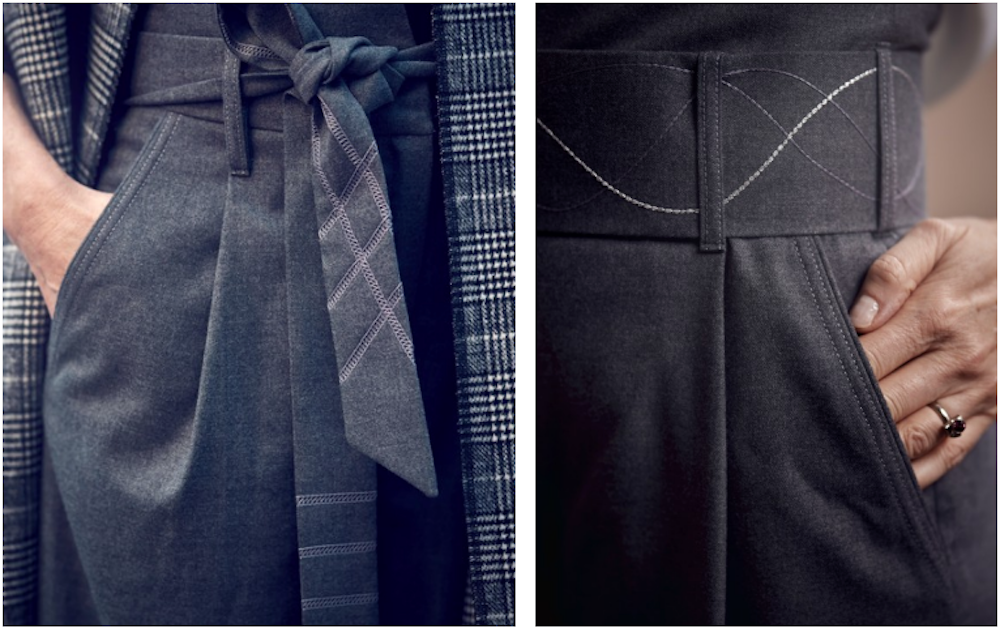
Einer der kreativsten Tricks beim Coverstich ist es, ihn umzudrehen. Die Rückseite eines breiten oder schmalen Doppel-Coverstichs – oder eines Dreifach-Coverstichs – erzeugt ein wunderschön strukturiertes Greiferfadenmuster, das eine auffällige Verzierung bildet. Bei dem hier gezeigten Gürtel wurde der breite Coverstich mit Baumwollgarn der Stärke 30 im Greifer für eine reichhaltige Struktur und normaler Overlock-Faden in den Nadeln verwendet.
So wird der Gürtel hergestellt:
- Bestimmen Sie die Breite und Länge des fertigen Gürtels und berücksichtigen Sie dabei die zum Binden benötigte Länge „ extra “. Rechnen Sie die Nahtzugaben hinzu.
- Bringen Sie Einlage auf der linke Seite des Gürtelstoffs an, wenn der Stoff zusätzliche Stabilität benötigt.
- Zeichnen Sie mit einem Stoffmarker und einem Lineal die Nählinien entsprechend dem von Ihnen gewählten Muster auf die linke Seite des Stoffes.
- Legen Sie den Stoff mit der rechten Seite nach unten unter den Nähfuß. Da die rechte Seite nach unten zeigt, entstehen die Greiferstiche auf der rechten Seite des Stoffes – dadurch entsteht der dekorative Effekt.
- Nähen Sie Ihre Decksteppnähte mit mäßiger Geschwindigkeit.


Gürtelschlaufen – In einem Schritt mit dem Riemen- und Gürtelschlaufenfuß
Individuell angefertigte Gürtelschlaufen, die perfekt verarbeitet aussehen – in einem einzigen Durchgang. Stellen Sie die Maschine auf den breiten Doppel-Coverstich ein und verwenden Sie den Gurt- und Gürtelschlaufenfuß.
So werden die Gürtelschlaufen gefertigt:
- Schneiden Sie einen Stoffstreifen mit einer Breite von 1" zu. Berechnen Sie die Länge anhand der Gürteltiefe, der Nahtzugaben und der Anzahl der benötigten Schlaufen. Am einfachsten ist es, einen langen, durchgehenden Streifen zu nähen und die einzelnen Schlaufen anschließend auf die richtige Länge zuzuschneiden.
- Schneiden Sie das vordere Ende des Streifens in einem Winkel von 45 Grad ab, sodass eine Spitze entsteht – so lässt er sich leichter in den Nähfuß einführen.
- Führen Sie das abgewinkelte Ende mit der rechten Seite nach oben in die Führung des Nähfußes ein. Ziehen Sie den Streifen durch den Schlitz und unter den Nähfuß hindurch, sodass das Ende dahinter herausragt. Eine Pinzette kann beim Einfädeln des Streifens hilfreich sein.
- Befestigen Sie den Nähfuß an der Maschine. Schieben Sie den Streifen etwa 2" (5 cm) hinter den Nähfuß und senken Sie den Nähfuß ab. Vergewissern Sie sich vor dem Nähen, dass beide Schnittkanten umgeschlagen sind.
-
Nähen Sie die ersten paar Stiche, halten Sie dann an und schneiden Sie die Fäden nahe am Nähfuß ab. Fahren Sie mit mittlerer Geschwindigkeit weiter sewing , wobei Sie den Stoffstreifen für einen gleichmäßigen Transport leicht unterhalb der vorderen Führung halten. Überprüfen Sie den Stoff während des Nähens regelmäßig.
Für einen markanteren Look: Verwenden Sie 30-wt-Baumwollgarn oder Ziernahtgarn in den Nadeln und stellen Sie eine längere Stichlänge ein.


Taschenbesatz – Paspelierte Kanten mit dem Paspelfuß
Paspeln verleihen Taschenrändern und Nähten ein markantes, maßgeschneidertes Finish, das den Look eines Kleidungsstücks sofort aufwertet. Sie können fertige Paspeln verwenden, wenn es praktischer ist, oder Ihre eigenen herstellen, um ein perfekt abgestimmtes, individuelles Ergebnis zu erzielen. Der Paspelfuß eignet sich für beides – eine Rille an der Unterseite führt die Kordel oder Paspel beim Nähen gleichmäßig.
Maschineneinstellung: Stellen Sie die Maschine auf den 4-Faden-Overlockstich ein und setzen Sie den Paspelfuß auf.

So nähen Sie eine Paspel in eine Naht ein:
- Legen Sie die Paspel entlang der Nahtlinie auf der rechten Seite Ihres Stoffes.
- Legen Sie das zweite Stoffstück mit der rechten Seite nach oben darauf, sodass die Paspel zwischen den Lagen liegt.
- Legen Sie den mehrlagigen Stoff so unter den Paspelfuß, dass die Paspel in der Rille an der Unterseite liegt.
- Nähen – die Führung führt die Paspel automatisch und sorgt so für ein gerades, gleichmäßiges Ergebnis.
So stellen Sie Ihre eigene Spritzmasse her:
- Schneiden Sie Stoffstreifen schräg oder quer zur Fadenrichtung zu, die breit genug sind, um die Schnur vollständig zu umwickeln, und berücksichtigen Sie dabei die Nahtzugaben. Es wird eine Schnurstärke von 2–3 mm empfohlen.
- Legen Sie die Kordel auf die linke Seite des Streifens und falten Sie den Stoff darüber.
- Legen Sie den Stoff und die Kordel so unter den Paspelfuß, dass die Kordel in der Rille liegt.
- Nähen Sie mit dem 4-Faden-Overlockstich.