

Como costurar um debrum perfeito — dicas, ferramentas e técnicas
CREATIVATE Educação
16 de julho de 2025
A debrumagem é um daqueles detalhes de acabamento que valoriza instantaneamente um projeto de costura ou de « quilting ». Aquela borda nítida e bem definida entre duas peças de tecido confere requinte, contraste e um toque profissional que é difícil de conseguir de outra forma — e é muito mais simples de fazer do que parece.
Esta lição utilizacordão de 1,8 mm e um calcador estreito para debrum, mas a técnica funciona da mesma forma, independentemente do tamanho do cordão. O único ajuste que terá de fazer para tamanhos diferentes é a posição da agulha.
Vai trabalhar com cordão de poliéster? Passe-o com um ferro a vapor antes de começar, para o pré-encolher e evitar que fique enrugado após a lavagem.
O que vai precisar
Materiais
- Cordão (1,8 mm utilizado nesta lição)
- Tecido principal — 2 peças cortadas no tamanho que desejar
- Tecido de contraste para o debrum — cortar numa tira com 1½" de largura e com o comprimento necessário
Ferramentas
- Pé para bordar (estreito)
- Régua de tubagem
- Stiletto
Instruções
Passo 1 — Fazer o enchimento
- Coloque o calcador para debrum na sua máquina.
- Coloque o cordão ao longo do centro da sua tira contrastante de 1½" no avesso do tecido.
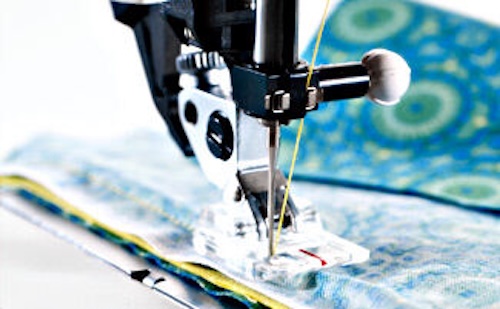
- Dobre a tira ao meio no sentido do comprimento, sobre o cordão, e coloque-a debaixo do calcador para debrum. O cordão deve ficar exatamente na ranhura do calcador, diretamente à esquerda da linha vermelha. Este alinhamento é fundamental para obter resultados consistentes.
- Defina a posição da agulha para 1,5.
- Costure ao longo de todo o comprimento da tira, utilizando um alfinete de costura para manter o cordão bem preso contra a dobra enquanto costura.
- Corte a margem de costura para ¼" utilizando a régua para debrum. Se o seu projeto exigir uma margem de costura mais larga, corte-a em conformidade.
Passo 2 — Fixar o debrum à primeira peça de tecido
- Coloque a fita de acabamento ao longo do lado direito do tecido, alinhando as bordas cruas. Prenda com alfinetes, se necessário.
- Defina a posição da agulha para 0,8 e costure ao longo de toda a tira. Quando terminar, deverá ver duas fileiras de pontos, sendo que a segunda fica mais próxima da borda do cordão.
Passo 3 — Fixar a segunda peça de tecido
- Coloque o segundo pedaço de tecido por cima do primeiro, com os lados direitos juntos, de forma a ficar com o debrum entre as duas camadas. Prenda com alfinetes, se necessário.
- Vire as três camadas ao contrário. Guie o cordão para dentro da ranhura do pé — não vai conseguir vê-lo, mas vai sentir que encaixa no lugar.
- Defina a posição da agulha para 0,3 e costure logo a dentro da linha de costura anterior, o mais próximo possível do cordão. Aproxime a posição da agulha, se necessário.
Passo 4 — Concluir
- Abra as duas peças de tecido e passe-as a ferro até ficarem bem lisas.